
From 4 to 6 June 2025, I had the privilege of attending the Cross-Cultural Religious Literacy (CCRL) Summit in Krakow, Poland. The event was co-organized by Love Your Neighbor Community (LYNC), the Templeton Religion Trust, and The Review of Faith & International Affairs. There, I met men and women of goodwill who dedicate their time and energy bringing together people of different faiths in the pursuit of peace in the world. My Krakow conversations have prompted me to consider some general aspects of the CCRL methodology, how Islamic teachings already support CCRL, and how the peacebuilding fundamentals of the Cordoba Peace Institute – Geneva (CPI) are similar to CCRL (albeit with a different terminology).
General Considerations
(1) Practical peacemakers often use their own methodologies and jargon in their work, which is rooted in their varied cultural and training backgrounds. However, despite their diversity they should all be able to translate these methodologies into a CCRL framework, which can be summarized by the following formula: “Know yourself, know the ‘other’ as s/he knows her/himself, and, work together for the common good.”
(2) A religious believer lives in a three-dimensional space: vertically in relation to the Creator; horizontally in relation to oneself; and horizontally in relation to others. Similarly, peace is three-dimensional: it exists with the Creator, with oneself, and with others. Although people may have different vertical relationships with the Creator, they share a horizontal plane on which they can collaborate for the greater good as they maintain the essence of their beliefs. That’s the aim of CCRL.
(3) CCRL covers more than just interreligious relations. It is also a useful tool for addressing intra-religious relations, which can be more conflictual, as well as inter-ideological relations. Ideologies, such as secularism, shape worldviews similarly to religions.
(4) CCRL is based on broadening one’s knowledge of oneself and others, which is essential since knowledge leads to peace, while ignorance is one way leading to violence. As the formula attributed to the Cordoban polymath Ibn Rushd (Averroes, 1126–1198) states, “Ignorance leads to fear; fear leads to hate; hate leads to violence. This is the equation.” In addition to the pathway described by Ibn Rushd, two others lead to hate and violence: one through exclusion and frustration, and the other through aggression and revenge. Ignorance and exclusion are manifestations of structural violence, whereas aggression is direct violence. These three pathways are not mutually exclusive and may be combined. Together, they constitute a three-lane highway to hate and violence.
Islamic Principles for Implementing CCRL
(5) When working in/with Muslim societies or communities, it is important to keep in mind the three fundamental Islamic principles that may be called to support the CCRL methodology: human Dignity, active Diversity, and Freedom of belief (the DDF nexus):
- “We granted the Children of Adam dignity” (Qur’an, Al-Isra, 17:70). Therefore, human dignity is a constant function of humanity, and applies to everyone regardless of race, religion, sex, age, or social class. It must be promoted and protected everywhere and under all circumstances.
- “O people, We have created you from a male and a female, and made you into nations and tribes so that you may know one another” (Qur’an, Al-Hujurat, 49:13). This verse acknowledges diversity and makes it the driver of inter-knowing. Reaching out to others (whether individuals or groups), to get to know them becomes a religious duty.
- “There is no coercion in religion” (Qur’an, Al-Baqara, 2:256). This verse is about the freedom of faith. Islamic scholars explain that the obligations of sharī’a are to promote and protect several universal values such as faith, life, progeny, mind, property and, of course, freedom. After all, no worship of God is meaningful without freedom, and there is no religious duty without it.
(6) CCRL is one of the conditions that enables covenantal pluralism. This type of pluralism fosters a cohesive, diverse society in which its various communities (religious, ethnic, linguistic, etc.) interact positively rather than passively coexisting. John Rawls’ concept of “overlapping consensus” is sometimes used to describe a model that has the same goal: establishing a true pluralistic society. In Islamic contexts, two models taken from early Islamic history are used to support the concept of covenantal pluralism: (a) the idea of “multiple belonging” set out in the “Medina Covenant,” and (b) the “origin-way-goal” model proposed by Muslim scholar Ibn al-Qayyim.
“Multiple Belonging” in the “Medina Covenant”:
To foster the active coexistence and the positive interaction among the constituents of a diverse society sharing the territory of Medina, a covenant was drafted by Prophet Muhammad in consultation with the Medina community leaders and signed in 622, the “Medina Covenant.” It acknowledged three layers of social belonging: (i) to the tribe as a social reality, (ii) to a community of faith, to mitigate tribal chauvinism, and (iii) to the City (Medina in Arabic), to mitigate religious chauvinism. Therefore, an individual is considered as a member of a tribe, a believer, and a citizen simultaneously. This covenant was instrumental in regulating the relations among the various components of the Medina population (Muslim Arabs, non-Muslim Arabs, and Jews) for four decades, providing them with a framework to work together for the protection and prosperity of the shared Medina, with a high degree of decentralization and the establishment of the subsidiarity principle, giving the Medina constituent units autonomy in social, cultural, and religious matters, each constituent unit remaining faithful to its belief without asking the others to abandon theirs.
The “Origin-Way-Goal” Model:
Imam Ibn al-Qayyim (1292-1350) distinguished between the origin, the way, and the goal in his theory of conflict. According to him, the absence of conflict occurs when the origin is one, the way is one, and the goal is one. Conflict is thus defined as the situation where the origins are incompatible (worldview conflict), the ways are divergent (process-based conflict), or the goals are contradictory (interest-based conflict). This leads to eight scenarios, ranging from full harmony to complete discord. In order to build a cohesive, actively diverse society, the focus should be on the “different origin – same way – same goal” scenario, and an effective methodology should be developed for transforming such a worldview conflict. This approach is based on the idea that, despite having different ideological or religious references and points of departure, the parties can agree on a common goal and work together to achieve it while remaining faithful to their own beliefs. This goal could be the consolidation of social cohesion and the establishment of the rule of law and good governance, for example.
CCRL in the Cordoba Peace Institute’s Work: Dialogue and Diapraxis
(7) CPI’s work on conflict transformation, social cohesion, and intra- and inter-faith in action is based on two main pillars: delivering training and providing safe spaces for dialogue. The training has two objectives: capacity building and providing an opportunity for participants to engage with one another, despite their differences. Participants are introduced to the field of conflict transformation and are equipped with the necessary skills to deal with conflict peacefully. This includes the skills required for CCRL, such as evaluation (through context analysis and conflict and peace mapping), negotiation (with or without mediators), and effective communication.
(8) The training is a useful tool for designing successful safe spaces for dialogue, which are organized away from the media to enable participants to speak freely. These safe spaces are essential for addressing worldview conflicts, such as religious and ideological polarization. These spaces provide an opportunity for physical encounter for people who have never met before and who only know each other through third-party portrayals, such as those in the media, which carry stereotypes. These spaces are safe because they establish safety rules that guarantee not only the physical safety of the participants, but also their ideological safety. In such settings, participants feel that their faith or worldview is not threatened.
(9) CPI’s numerous experiences over the past two decades, involving Muslims/Christians, Islamists/Secularists, Sufis/Salafis, Sunni/Shia, have shown that the dynamics of exchanges in such safe spaces follow the same pattern. When the participants from different groups meet for the first time, there is a palpable tension between them, reflected in their negative attitudes towards each other and the violence of the words exchanged. After a few rounds of engaging with one another, however, they gradually discover the humanity of each other, acknowledge it, get to know one another, deconstruct stereotypes, develop an interest in what the ‘other’ has to say, and become ready to listen. It is only at this stage that genuine dialogue, rather than debate, can begin.
(10) The true dialogue enables a gradual understanding of the ‘other,’ thereby developing the CCRL comparative competency. It also allows for questioning one’s own assumptions and biases, and for a deeper understanding of the ‘self,’ hence developing the CCRL personal competency. The goal of providing a safe dialogue space is not just an exchange of words (dialogue), which initiates the trust-building process, but above all an exchange of actions (diapraxis). Joint practical work is more effective for building trust. The joint action that is encouraged from the beginning of the process requires an understanding of the context of potential collaborations for the common good and the development of the CCRL collaborative competency.
In order to live in peace, communities and individuals with different worldviews and value systems need to engage with each other, learn from one another, and avoid operating in isolation. This mutual enrichment leads to more adaptive, inclusive, and effective collaboration for the common good. Dialogue uncovers new perspectives and improves self-understanding and understanding of the ‘other,’ enabling communities with different ideological frameworks and religious beliefs to work together to reach a shared goal without betraying their convictions.
*******
About the Author
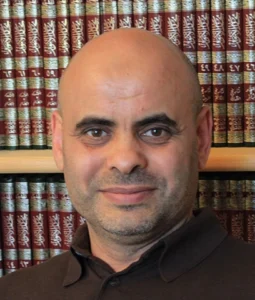
Abbas Aroua is an adjunct professor at the Lausanne Faculty of Medicine and the founder and director of Cordoba Peace Institute – Geneva (CPI), which since 2002 has been working on violence prevention, conflict transformation and peacemaking in societies with Muslim populations. Abbas Aroua is the author of “Introduction to Conflict Transformation” (CPI, Geneva 2023), “The Quest for Peace in the Islamic Tradition” (Kolofon Press, Oslo 2013), “The Work of Goodness: A Comprehensive Approach to Human Security” (CPI, Geneva 2010), and other research papers available online at cpi-geneva.org.