
Ira noticed another child smiling. Like her, he had lost his father in the war. Seeing him smile, she smiled too.
The project team describes what that moment meant to her: Ira came to believe that her father in heaven would be glad to see her smile. She was still grieving. But in the company of children who understood her loss, joy was becoming possible again.
Ira’s experience is one of the stories behind LYNC’s 2025 work with children in Ukraine. Launched in 2022, the Caring for the Children of Ukraine project continued in Chernivtsi, in western Ukraine, where many families displaced from the east and south had sought refuge.
For these children, leaving home had not ended the fear. Some had lived through occupation or shelling. Others were mourning a parent, or waiting for news of someone who had disappeared. The work in Chernivtsi gave them people to turn to and practical ways to cope with what they were carrying.
Finding Words for Grief
Working with Sinai church, the project trained 38 people to provide psychological support to children, with supervision and ongoing guidance. The church organized two summer camps where more than 100 displaced children received care, encouragement and support.
Two groups brought together children whose parents had died in the war. There, a child could meet someone who knew the same kind of absence. Ira’s moment of connection grew out of that shared understanding.
For Vanya, the first step was tears. The sixteen-year-old had recently learned that his father, who had been missing, had died. He told the team that he had always felt ashamed to cry. During the project, he finally did. He described feeling relief because the people around him understood and supported him.
Roma, seventeen, began speaking about a different kind of loss. His friend had disappeared three years earlier. Until these sessions, he had kept the pain to himself. With support, he was able to share what had troubled him for so long.
When Sleep Became Easier
Kostya’s family had escaped occupation in Berdyansk. Their journey to western Ukraine took two days in a car, through checkpoints and document inspections, with rockets and sirens around them.
For three years, a version of that journey returned in his sleep: a car carrying him and his parents through fire, rockets and screams. At first, the sixteen-year-old was quiet and withdrawn. When trainers introduced ways to work with nightmares, he began to describe the dream.
The team reports that, after practicing the techniques, Kostya became calmer and more open. The recurring nightmare stopped.
The People Behind the Care
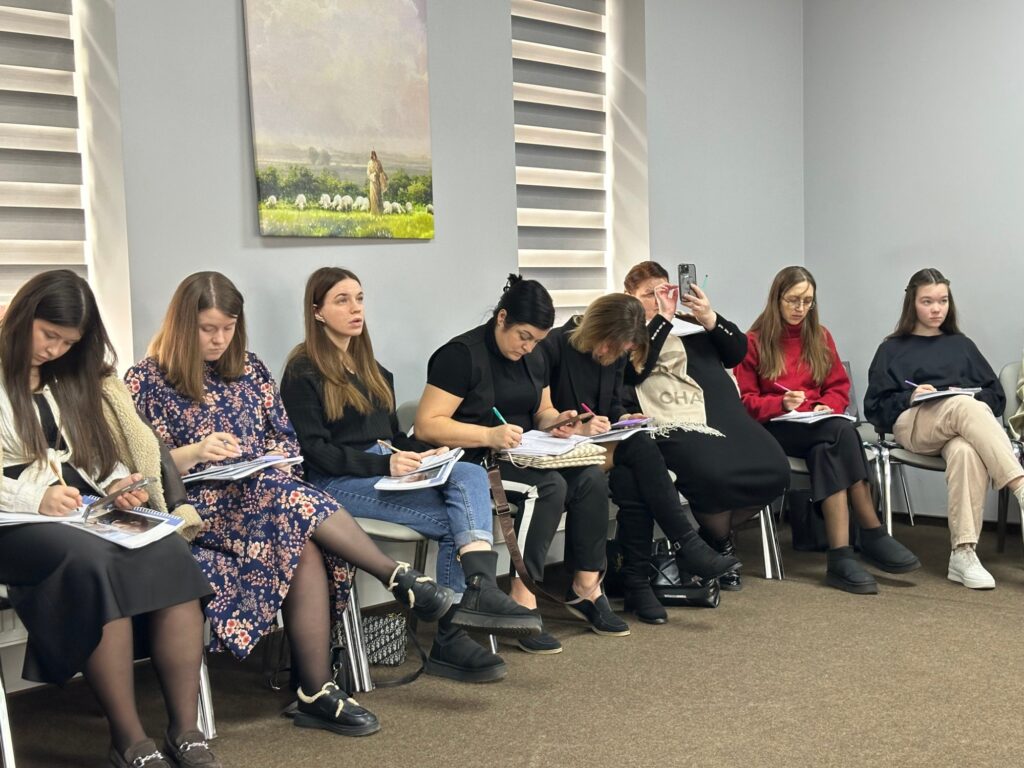
Participants take notes during the March 2025 training in Chernivtsi.
The work with children was supported by a partnership that began in March 2025 between Love Your Neighbor Community and HOPE worldwide Ukraine. That spring, trainers gathered in Chernivtsi to learn the “Children and War: Teaching Recovery Techniques” program.
Over the next six months, they put that learning into practice with children. Specialists from HOPE worldwide Ukraine continued to supervise and support them throughout. On September 6, the trainers gathered again in Chernivtsi to receive their certificates, marking six months of learning and work.
In the children’s sessions, techniques such as “Safe Place” and “Steps of Fear” offered ways to respond to frightening memories and feelings. Trainers listened to children, parents and caregivers, adapting their approach to what they heard. The project team reports that children continued using the tools in stressful situations and sometimes shared them with adults at home.
Faith was also part of the care described in the project report. Sessions began with prayer, and the Christian trainers prayed with children during air raid alarms. Some children carried that practice home, teaching their parents to pray when sirens sounded. For the team, prayer offered comfort alongside the psychological support.
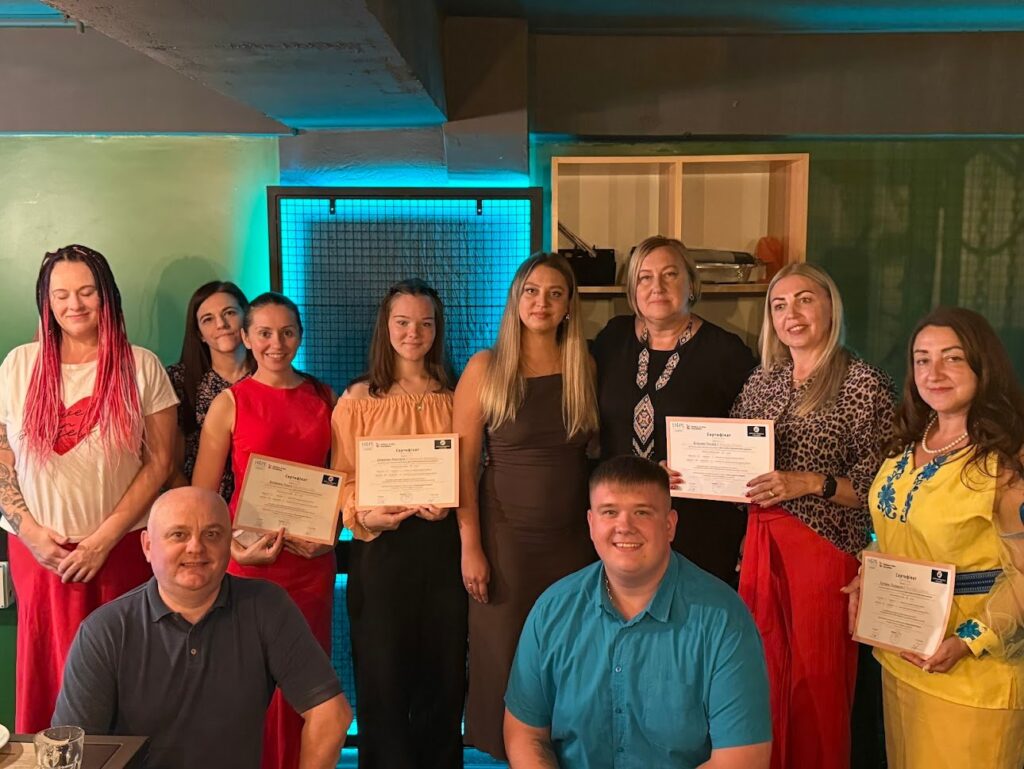
Trainers and colleagues gather in Chernivtsi on September 6, 2025, as new trainers receive their certificates.
The September gathering recognized the adults’ work. The children’s stories show why that work matters: a teenager able to speak about his father, another able to sleep without the same frightening dream, a girl discovering that she can smile while still loving and missing her dad.