
In mid-2025, it is essentially a truism that polarized politics undermines nations’ welfare and democratic ideals, while religious differences and multicultural societies are often blamed for deep divides. What approaches and what tools, therefore, can support the efforts of leaders from different sectors to bridge divides and thus to avoid conflict and acute tensions? How can constructive policies work to capture the benefits of diversity (that are so clear in theory) in the multi-ethnic and multi-religious societies that are our contemporary hallmark?
The June 4-6, 2025 Cross-Cultural Religious Literacy (CCRL) Summit in Kraków, Poland, assembled a group of scholars and practitioners, including religious leaders, from several world regions, to focus on how CCRL is framed and applied in different situations. The central goal was to build on what was seen as promising experience and, still more, to address a critical need politically, socially, economically, and spiritually, by deepening a shared understanding of CCRL as a practice and a framework for fostering covenantal pluralism, social cohesion, and ethical leadership. The encounters were invaluable in deepening both appreciation for the challenges involved and in identifying practical ideas to explore with a range of partners.
The Kraków summit drew on the insights of practitioners and scholars but also on the lived experience of Kraków itself, with its layered history of religious diversity, tragedy, and resilience. Visits to Jagiellonian University (where science encountered religious beliefs over the centuries), Ghetto Heroes Square (memorializing the tragedy of genocide), and Wawel Castle (symbol of creative leadership) reminded participants not only of the catastrophic consequences of religious intolerance, but also of the enduring capacity of faith to inspire respect for dignity, solidarity, and resistance against injustice.
WFDD as a Partner in CCRL
The World Faiths Development Dialogue (WFDD) (Katherine is executive director, Sudipta senior researcher) worked for 25 years at the intersection of global development and religion. A small independent 501c3, WFDD emerged from a joint initiative of Jim Wolfensohn (as President of the World Bank) and George Carey (then Archbishop of Canterbury) to bridge what they saw as a large gulf between two critical and very global “worlds.” The core idea was that most international development work and workers ignored the important roles that religious actors and institutions play in the lives of billions of people around the world and thus missed many opportunities for effective partnerships. WFDD’s work and goals align closely with those of its partner, Georgetown University’s Berkley Center for Religion, Peace, and World Affairs.
WFDD’s engagement with the ethos of CCRL is grounded in over two decades of work at the intersection of religion and development. WFDD works in partnership with faith inspired organizations (FIOs), civil society actors, and governments to address systemic challenges in maternal health, education, family planning, and social protection. In these contexts, religion is not simply a private conviction but a structuring force in public life—shaping how communities interpret health, gender roles, education, and governance, among other issues.
WFDD’s broad mandate is grounded in and focused on the challenges of poverty and human flourishing, starting with knowledge and awareness to answer this basic question: why focus on religion in development and humanitarian work and how? Our interests and work span a wide range, from very global questions (strategies for development, G20 links, pandemic preparedness) to very local (decision making on family planning, mechanisms for community participation). As understandings about “development” have expanded, so have WFDD’s; they encompass today humanitarian action, peacebuilding, and climate issues, as well as more traditional international development areas like health and education. WFDD tends more towards policy and operational challenges than purer research.
WFDD serves a wide array of stakeholders—religious communities, development practitioners, governments, NGOs, and multilateral organizations—conducting research, facilitating partnerships, supporting grassroots initiatives, and convening different forms of dialogue. At its heart, WFDD aims to promote deeper understanding and more effective collaboration between the development community and religious actors, recognizing the moral authority, social infrastructure, and the local knowledge that religious institutions often bring to complex development challenges as well as obstacles, real and perceived, to their meaningful integration.
The principles that underpin the CCRL framework are central to the visions that drive WFDD’s work. From the outset, WFDD has faced the challenges of conflictual and dramatically different visions of religious roles in social and political affairs. For some, religious beliefs and practice are foundational, while others see them as causing or fueling divides. In the regions where WFDD works—primarily West and East Africa, South Asia, and Southeast Asia—religious traditions and institutions support deeply held personal convictions and needs. As central elements of public life, they shape how people understand, for example, health, education, gender roles, and governance. The “missing link” is that there is little deliberate, “strategic” effort to appreciate what religious communities do in development related fields.
Religious diversity and the complex interactions between faith traditions and cultural practices are often overlooked or misunderstood in both development policy and programming. Many religious actors are skeptical or suspicious about the development world or focus primarily on the potential for financial support. These disconnects can lead to missed opportunities, mistrust, and even resistance to otherwise well-intentioned initiatives. The roles that religious differences play both in conflicts (negative) and shaping optimal policies (positive) are little appreciated, despite their pervasive presence. This points to WFDD’s goal of helping to forge meaningful partnerships (what we term “engagement”).
CCRL offers an avenue for progress in this context. Promoting mutual understanding within and across religious communities is fundamental to fostering inclusive, effective, and sustainable development. It promises to equip stakeholders—whether they are development practitioners, policymakers, educators, or religious leaders themselves—with the tools to engage across lines of religious and cultural difference with respect, nuance, and insight. CCRL is less about theological appreciation and expertise per se than about fostering awareness and engagement of how religious individuals and institutions understand themselves, and their interaction with society and the state. CCRL in turn leads to nuanced understanding of how religion functions in specific social and cultural settings, and how it intersects with issues of power, identity, and development.
In practical terms, WFDD has highlighted CCRL as a model in, inter alia, Bangladesh, Geneva, Washington, DC, Brasilia, and South Africa. CCRL also serves as a core example in the G20 Interfaith Forum context, featured in both meetings and advocacy. The CCRL framework, always adapted to a specific context, calls for nuanced engagement with religious diversity and operational paths towards implementation. This includes attention to intra-religious differences, the gendered dimensions of religious authority, and the complex intersections between religious narratives and state structures.
WFDD aims to develop and adapt CCRL principles in different contexts, as the underlying approach resonates with what we see as priority challenges in many settings. CCRL can provide an essential corrective to the mainstream development tendency to overlook the influence and agency of religious actors. Far beyond “interfaith kumbaya” or theological expertise, CCRL aims to cultivate capacities to understand how religion operates in real-world settings—how beliefs translate into social practices, how narratives of faith intersect with policy, and how religious leaders can act as both barriers and bridges to inclusive development. With commitment to partnership—deeply local, long-term, and grounded in mutual respect at the heart of WFDD’s approach, CCRL strengthens this commitment by equipping both religious and secular actors with the tools to engage across differences. CCRL offers an avenue to build trust, navigate complexity, and create common, sustainable solutions.
The Kraków Summit
The Kraków summit was notable for its intellectual rigor and for the diversity of institutional models that were explored: a rich tapestry of CCRL applications. WFDD’s contributions to the summit drew heavily on its ongoing Strategic Religious Engagement (SRE) work in countries such as Ghana, the Philippines, Senegal, Sri Lanka, and Bangladesh. CCRL is being tested in lived contexts—through curriculum development, policy dialogues, capacity-building workshops, and grassroots research. CCRL offers a way forward by surfacing marginalized voices and reframing religious identity as a source of civic responsibility.
CCRL is, at its core, a practice that can move us from polite coexistence to principled, mutual engagement. It calls for covenantal pluralism: a willingness not only to tolerate difference, but to respect it, protect it, and live alongside it with humility and curiosity, even without sacrificing the core of one’s own convictions. The approach is inherently dual: both top-down and bottom-up. Legal structures can guarantee rights and protections, but without a culture of trust and a daily ethic of cooperation, those structures ring hollow. Just as policies matter, so too do relationships—and the ability to navigate difference with integrity.
The setting of Kraków underscored this point powerfully. A city of profound beauty and painful history, Kraków’s landmarks served as a living curriculum, reminding us that religious difference has long been a crucible for both atrocity and imagination. From Copernicus’s theological education and scientific inquiry to the resistance of Tadeusz Pankiewicz, who served Jews from his pharmacy during the Nazi occupation, Kraków underscores what is at stake when difference is honored—or erased. The Summit’s principal organizer and moderator, Dr. Chris Seiple, reminded participants of the tragic costs of failing to honor the “dignity of difference” and gestured toward the redemptive power of deliberate, sustained engagement across divides. CCRL thus offers both a moral imperative and a strategic necessity.
For WFDD and its partners, it is a call to action—to accompany communities not only in understanding each other better, but in building a future together.
A few essential ideas emerge looking ahead:
(a) Literacy is competency, not just a curriculum. CCRL as a layered set of capacities demands self-awareness about one’s own faith commitments, comparative understanding of others, and collaborative fluency—as well as the skills to communicate and build together across boundaries.
(b) Context is everything. Models of CCRL cannot be lifted and dropped from one country to another. What works in Indonesia must be reimagined for Bangladesh, Ghana, or Sri Lanka.
(c) Inclusion is non-negotiable. CCRL efforts must center voices historically left out—especially women, youth, and religious minorities. These are not peripheral players; they are essential co-authors of any initiative that seeks to shift cultural norms or public policy.
(d) Dialogue is not enough—we need metrics. Alongside deep appreciation for the human encounters CCRL fosters, essential questions include how to measure impact changes in attitudes, policy influence, gender equity, and social trust.
(e) Engagement over tolerance. Tolerance is necessary but insufficient. The goal is not just peaceful but siloed coexistence, but authentic collaboration. That means addressing suspicion, especially in places with strong secular traditions or dominant religious monopolies. It means holding space for disagreement—and for joint action.
To be sure, CCRL faces persistent and evolving challenges. First, context is not static. Political upheavals, economic crises, and shifting social dynamics can quickly reshape the religious landscape, affecting both the relevance and receptivity of CCRL efforts. What works in one moment or locality may falter under new regimes, rising ethno-nationalisms, or economic austerity. Second, while much CCRL work has made significant strides in fostering Muslim-Christian engagement, there are pressing needs to widen the circle. Non-Abrahamic religions—such as Buddhism, Hinduism, and Indigenous traditions—are often underrepresented in both curriculum and practice. Finally, sustainability is a critical concern. Effective CCRL initiatives require long-term investment, yet much of the current work is dependent on short-term funding cycles or limited donor portfolios. Building a diverse and stable base of support—across sectors and regions—is essential if CCRL is to mature from promising pilot projects into a robust global field.
The Kraków summit sparked a renewed sense of shared purpose. CCRL is not a panacea—it is a process. It succeeds where it is embedded in local realities, attuned to power dynamics, and open to continuous reflection. It offers a wide potential for integration into educational curricula, the design of public policy, the ethos of interfaith engagement, and the muscle memory of development practice.
*******
About the Author
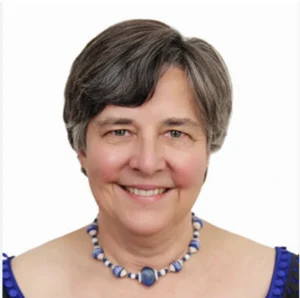
Katherine Marshall is a Georgetown Berkley Center senior fellow and executive director of the World Faiths Development Dialogue, bringing decades of World Bank–level experience to bridge religion and global development.
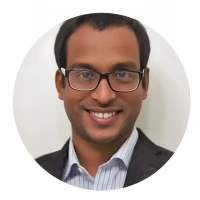
Dr. Sudipta Roy is a WFDD senior researcher and Georgetown Berkley Center fellow whose work bridges education, religion, and development in South/Southeast Asia, and he also directs the American Institute of Bangladesh Studies.