
The first journey began with one mother and two children.
As Russia launched its full-scale invasion of Ukraine in February 2022, Inga and her children needed to leave Kyiv. Love Your Neighbor Community, known as LYNC, activated its network inside the country. The family traveled to a safe checkpoint and onward to the border, where a LYNC associate met them. Other people were already working on what would come next.
Soon, another urgent request came from Kharkiv. Ten students were stranded in an unsafe shelter during intense bombing. The network helped get them to a railway station, where they boarded a train to continue their escape toward Poland.
Across the wider evacuation and resettlement effort, LYNC took responsibility for helping more than 4,000 refugees escape bombardment and rebuild their lives. Its commitment reached from the first urgent phone call to the support that would help a family settle in Germany.
Preparing a Place to Arrive
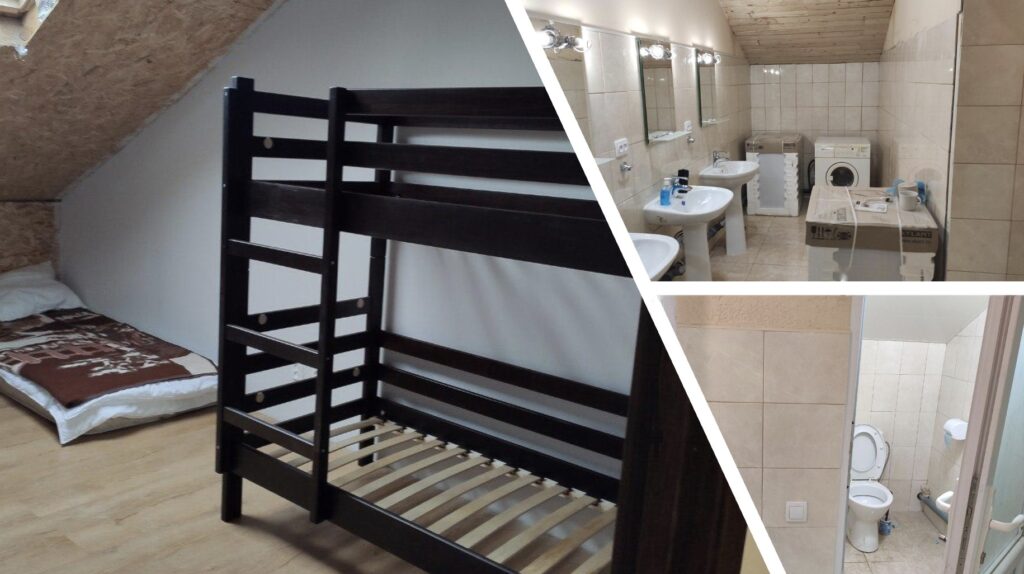
In Germany, Serhii Kosiak, director of LYNC’s European Program, was calling churches and local organizations to find places where Ukrainian families could stay.
The relationships behind this response had roots in an earlier invasion. In 2014, as Russia occupied Crimea and war spread through eastern Ukraine, LYNC founder Wade Kusack witnessed the devastation firsthand. Working alongside Ukrainian author and humanitarian Serhii Kosiak, he helped mobilize networks to bring firewood and food to people affected by the fighting and organize evacuations after bombardments. Keeping people warm and helping them leave dangerous areas required trusted contacts who could turn an urgent request into practical help.
When the full-scale invasion began in 2022, that experience became a foundation for a much larger response. Bombardment and damaged infrastructure made journeys uncertain, while families arriving across the border needed immediate care. LYNC and its partners worked to connect those stages, organizing ways out of danger and preparing a welcome that could carry families through the first difficult months of rebuilding their lives.
Within days, churches in Saxony were preparing to welcome the first 100 refugees. One offered a three-story building with room for at least 50 people, although it needed repairs. Others made guesthouses and vacant apartments available. Families opened their homes, and some German supporters paid to rent apartments for people they had never met.
LYNC and its partners organized evacuation hotlines, identified safe routes and coordinated transportation. Local Christian churches in Lviv organized departures and provided food and a roof for people waiting to travel. Buses carried passengers through Poland to Germany, where Serhii and his partners arranged accommodation and helped families register for protection and support.
By early March, departures from Lviv were taking place two or three times a week. Bautzen became a center of the response, connecting new arrivals with host families, church accommodation and help for the weeks ahead.
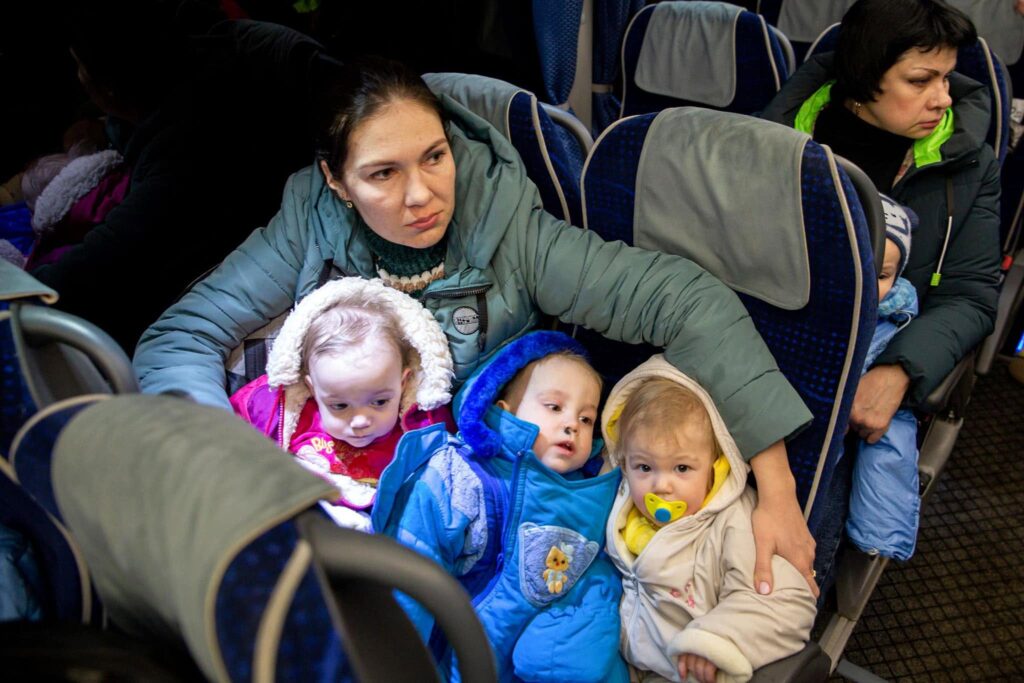
A young woman keeps three young children close aboard a bus during the evacuation effort.
The First Night in a Bed
One family later described what that welcome meant. After five days in a bomb shelter, two evacuations and repeated journeys, they reached Dresden, where Serhii met them at the railway station late at night. They remembered how exhausted he looked, and how glad he was that they were safe.
There was dinner at Josua-Gemeinde church in Bautzen, with tears and conversation about Donetsk and the war. Then Serhii introduced them to the Brauner family, who welcomed them like visiting relatives. That night, after so much time in shelters, trains and buses, they slept in beds.
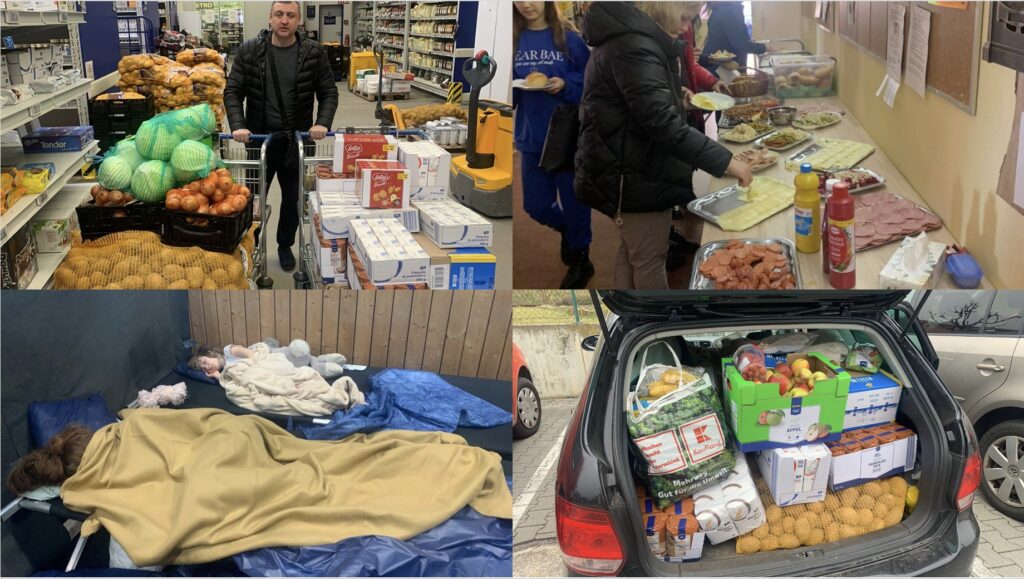
Clockwise from top left: Serhii Kosiak stocks up on food for new arrivals, families share a meal, a car is loaded with groceries, and children rest on camp mats.
Such evenings required an enormous amount of work. During the first 18 days of the invasion, Serhii reported that the network had received more than 1,000 refugees. By March 23, he put the number welcomed and accommodated at approximately 1,200. Places in the Bautzen and Görlitz area were becoming scarce, and the team kept searching for room.
The emotional weight was heavy, too. Serhii listened daily to accounts of bombardment and desperate searches for shelter. When he told one arriving group that bombers would no longer fly over their heads, many began to cry.
He described the reassurance people were beginning to hold onto in two short phrases: “We are safe” and “We will be cared for.”
Helping Families Make a Home
As spring continued, the work expanded into the everyday tasks of starting again. Families needed longer-term apartments, furniture and help navigating registration. The Ukrainian aid center in Bautzen became so busy that Serhii compared it to a beehive, with everyone at work.
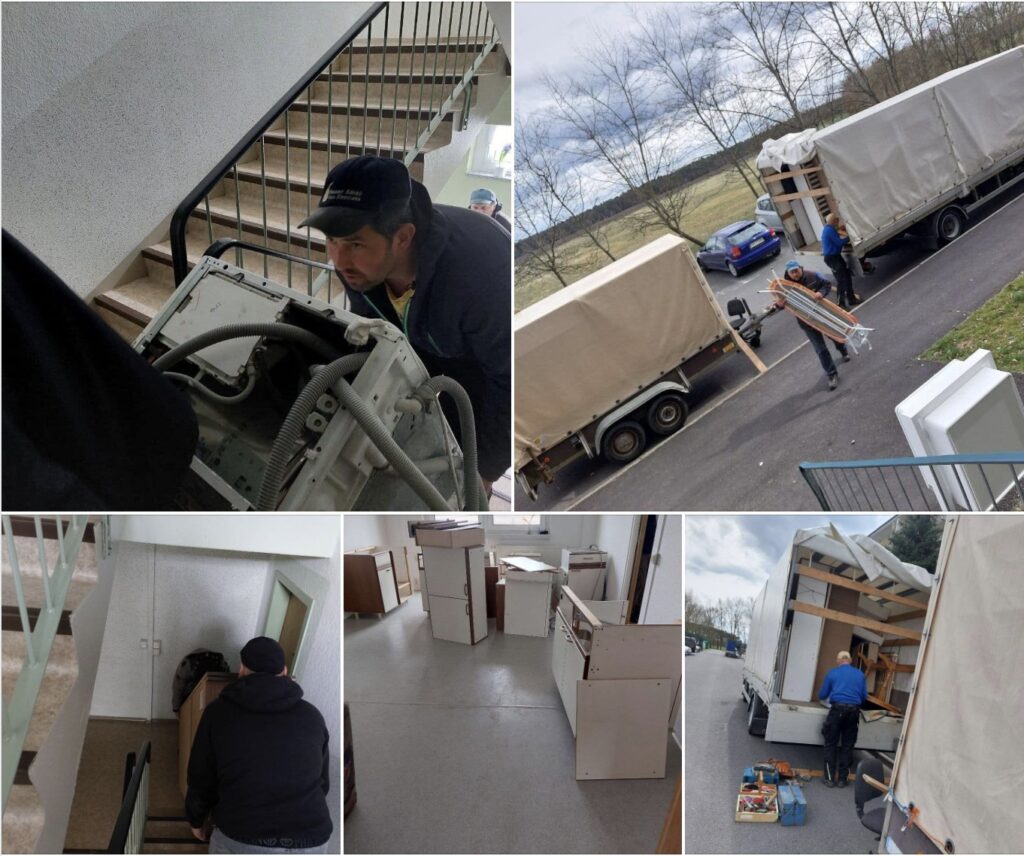
Host families and volunteers helped turn temporary accommodation into places where people could begin to settle. In Germany, legal assistance helped refugees navigate registration and access public support. Trauma healing and psychological care helped people begin to process what they had lived through. Church members put their faith into practice by sharing homes and covering rent, while LYNC supporters helped finance evacuation and continuing care.
LYNC also helped organize a Ukrainian refugee community in Germany. Families could connect with others who understood their experiences, share practical help and build friendships while adjusting to unfamiliar surroundings. This sense of belonging became part of the work of starting again.
“Our goal is to save people and help them begin a new life,” Serhii wrote. The search for an apartment was part of that purpose, just as the journey across the border had been.
A Longer Road out of Mariupol
While families were settling in Germany, others were still trying to escape Mariupol. Messages reaching Serhii described people sheltering without food or water, and relatives whose families could no longer reach them.
In May, the team helped bring a group of 34 people from Mariupol to safety in Germany. They had endured weeks of bombardment, hunger and thirst. Serhii reported that their route had taken them through filtration camps and the Russian city of Taganrog before they reached Estonia.
There, pastor Artur Põld offered a welcome, and LYNC’s financial support helped the group rest and prepare for the onward journey. The bus from Estonia to Germany alone cost €3,000. Behind that figure was the practical work of helping people reach a place where they could be received and supported.
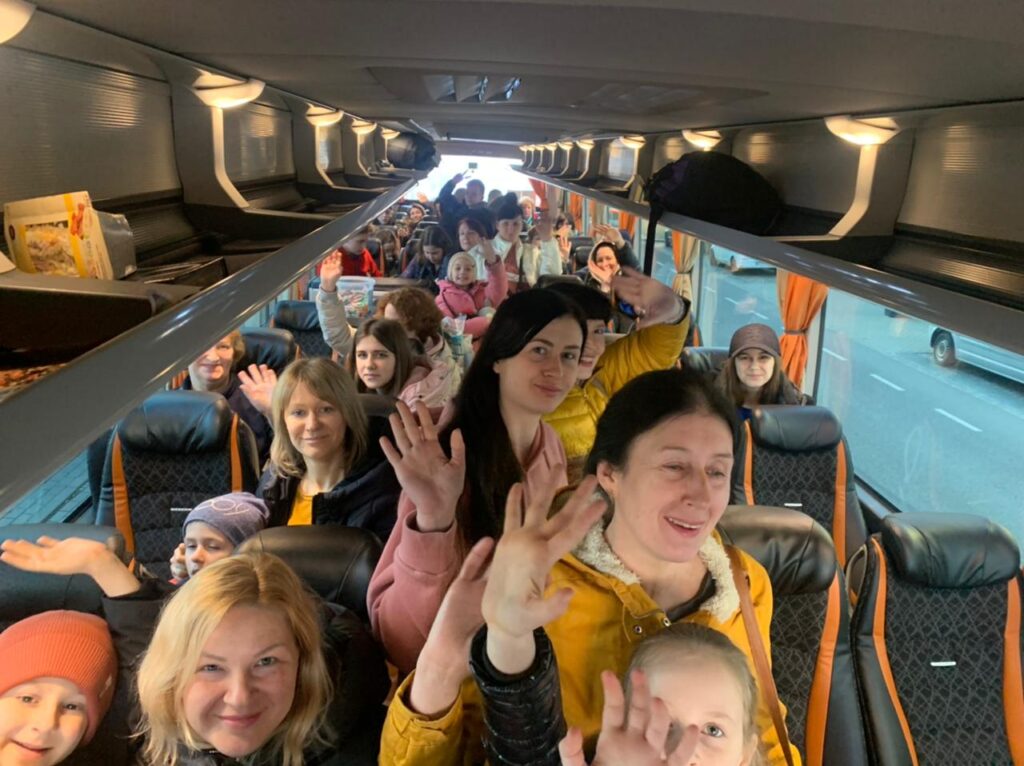
Once the group arrived, the team provided accommodation and food while registration began. They also prepared for the longer work of psychological support, recovery and adjustment to life in a new country. The journey had brought the survivors out of danger; the people waiting for them would help with what followed.
New Friends in a Church Courtyard
In August, the meaning of that continued care could be seen in a quiet encounter after a church service in Bautzen. LYNC’s Abigail Rodriguez described meeting with a recently resettled family from Mariupol whose members spanned four generations. A woman approached her to thank LYNC’s supporters for the emergency assistance and transport that had helped bring them to Germany.
As they stood in the courtyard, more of the family’s story emerged. Four siblings had reached Germany. Their brother Dennis had been killed in Mariupol before the family left. His wife and child had traveled on a bus provided by LYNC, and the family wanted the team to understand what that help had meant.
The family and the LYNC team cried together. Church volunteers gathered around them and stayed. Alongside conversations about finding work and settling in Germany, there was room to speak about the person they had lost.
Half an hour later, as Abigail left, the family was waving goodbye to new friends.
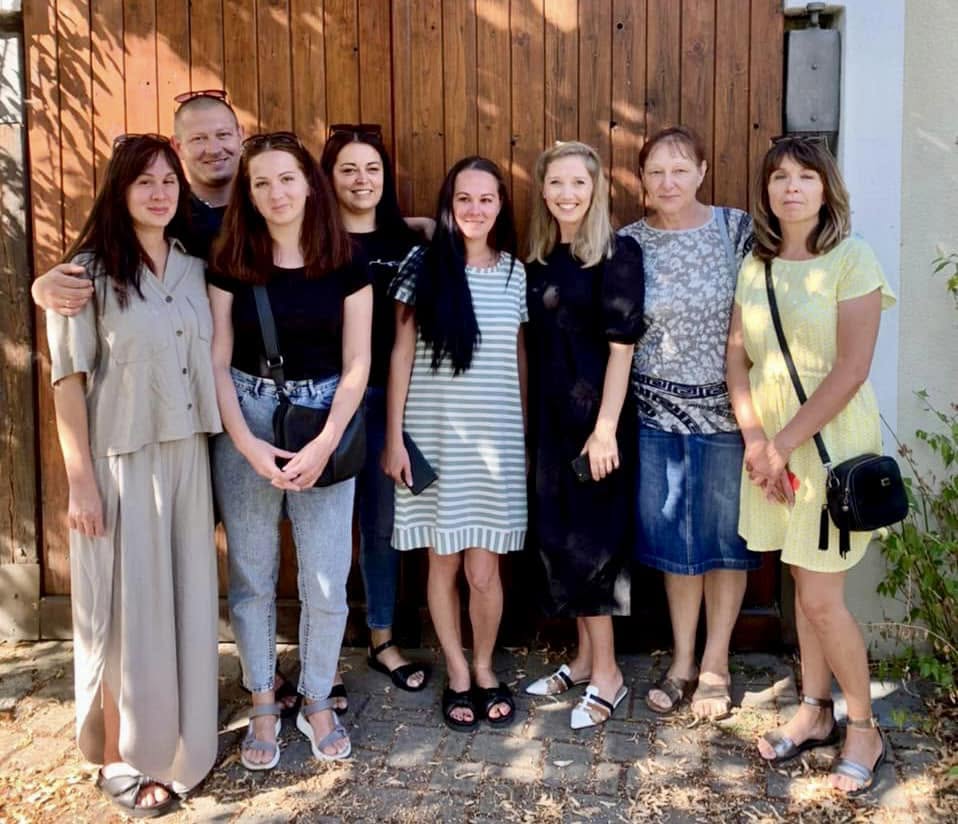
Food and essential supplies met the needs of the day. LYNC’s responsibility continued into the days that followed: helping families find a home, get the right support and become part of a community. For LYNC, evacuation meant staying involved as people moved from immediate danger toward a new life.
Accounts from Serhii Kosiak, director of LYNC’s European Program, Abigail Rodriguez’s reporting from Bautzen, and a family testimony shared in 2022, alongside LYNC’s account of its wider evacuation and resettlement work. Quotations from Russian translated into English.