
A government’s approach to religious freedom becomes clear in everyday encounters: when a community seeks registration, when a religious leader requests access to believers, or when a public official listens to a minority group’s concerns. These encounters reveal how freedom is understood and practiced. They also shape whether citizens see public institutions as worthy of their trust.
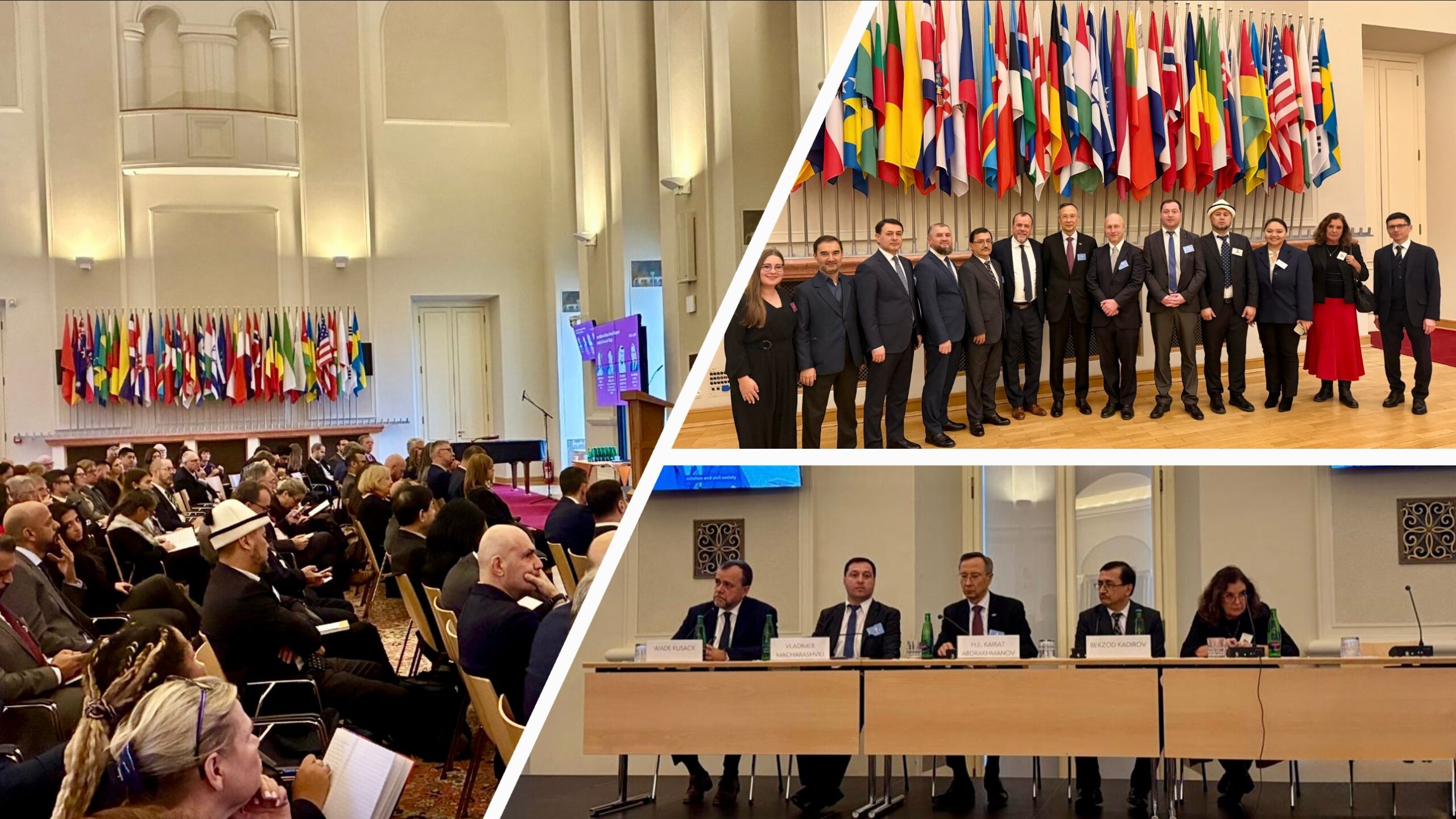
That relationship between freedom and trust was at the center of the Eurasia Panel moderated by LYNC Founder and CEO Wade Kusack on November 11 at Prague’s Czernin Palace. Government officials from Uzbekistan, Kazakhstan, and Georgia joined the discussion during the High-Level Conference of the Article 18 Alliance, convened under the leadership of Ambassador Robert Řehák. The panel explored the state’s role in religious life, coexistence among different beliefs, and the relationship between religious freedom and security.
LYNC’s approach rests on the conviction that governments can contribute to more secure societies by protecting freedom of conscience and developing relationships of trust with religious communities. This requires officials to understand the people their policies affect, respect their independence, and create opportunities for cooperation across differences.
For countries shaped by Soviet rule, this work carries a particular historical weight. Decades of official atheism left institutions accustomed to supervising religious life and societies marked by suspicion. Since independence, countries across Eurasia have followed different paths. Yet the question of how to develop a more trusting relationship between government and religious communities remains relevant across the region.
The officials who participated in Prague brought national experiences to that conversation. Their participation matters because registration, education, engagement with religious leaders, and responses to extremism are part of the everyday work of public institutions. Progress depends in part on how the people responsible for those decisions understand religious freedom.
Bekzod Kadirov of Uzbekistan’s Committee for Religious Affairs described his country’s approach through its legal framework, particularly the 2021 law on freedom of conscience and religious organizations. He reported that 2,393 religious organizations representing 16 denominations operate in Uzbekistan and highlighted government encouragement of religious observance. He also described conferences, sports, and cultural events organized around tolerance and human fraternity as opportunities for people of different beliefs to meet.
These initiatives offer practical starting points for engagement. Their lasting value should be assessed through the experiences of the communities involved. Can people raise concerns openly? Do smaller communities have a meaningful voice? Does participation lead to greater understanding among neighbors and more responsive public institutions? Those questions belong in every country’s assessment of its progress.
Vladimer Macharashvili of Georgia’s State Agency for Religious Issues brought another dimension to the discussion. Alongside Georgia’s experience of religious policy and registration, he raised concerns about religious rights in the country’s occupied territories. According to the agency’s account, he described barriers affecting Georgian Orthodox clergy and believers in Abkhazia and the Tskhinvali region, including access for religious services. Georgia’s account of his remarks.
His contribution brought the discussion to the level of people trying to practice their faith. Access to a religious community, a place of worship, or spiritual care can become deeply vulnerable in situations of conflict. Protecting that access should remain a responsibility even when political disagreements appear intractable.
The security question deserves equally careful attention. Governments have a responsibility to protect people from violence. They also need to examine whether their policies distinguish adequately between peaceful religious practice and conduct that threatens others. Broad suspicion can make it harder to build the relationships through which officials and communities understand emerging problems.
Religious freedom is a right that governments must protect even when a belief is unfamiliar or unpopular. Its contribution to security grows when people can practice their faith openly, discuss their concerns, and participate in public life without having to surrender their convictions. A community’s freedom should never depend on whether its leaders enjoy a favorable relationship with the state.
This is why religious literacy matters. Officials need opportunities to understand religious communities beyond administrative categories. Religious leaders need ways to engage public institutions and neighbors whose beliefs differ from their own. LYNC’s work in Cross-Cultural Religious Literacy seeks to help people develop the knowledge and habits needed for that engagement: listening carefully, recognizing assumptions, and working together on shared concerns.
The wider Prague conference showed how urgent this work has become. Online religious hatred, antisemitism, and the use of artificial intelligence to spread division reach into communities across borders. Ambassador Řehák captured the challenge in a public reflection during the conference: “When algorithms spread hate, our response is cohesion!” His conference post.
Cohesion must leave room for disagreement. People should be able to hold strong convictions while recognizing the dignity and freedom of their neighbors. Governments help create the conditions for that coexistence when they listen consistently, apply protections fairly, and make space for communities to contribute.
Regional learning can support this work. Countries with related historical experiences can ask one another difficult questions with a particular understanding of the institutions and habits involved. They can compare policies, examine their consequences, and adapt useful practices to their own circumstances. The presence of Kazakhstan’s Ambassador Kairat Abdrakhmanov alongside officials from Uzbekistan and Georgia created an opportunity for precisely this kind of exchange.
Kusack also welcomed Mr. Talantbek Tashibekov, Chairman of the National Agency for Religious Affairs and Interethnic Relations under the President of the Republic of Kyrgyzstan, to introduce Kyrgyzstan’s approach to religious freedom. LYNC and the agency are exploring possible areas of collaboration. That exploration offers another opportunity to broaden regional learning while respecting each country’s context.
The Eurasia Panel’s continuing task is to make these exchanges useful beyond the conference room. That means maintaining contact, bringing religious communities and civil society into the conversation, and examining what changes in practice. It means asking whether policies become more responsive and whether people who previously struggled to be heard gain a meaningful opportunity to participate.
The value of the Prague conversation will ultimately be measured in those everyday encounters between citizens and the state. A religious community should be able to approach a public institution expecting a fair hearing. An official should have the knowledge to engage that community with understanding. Building those relationships is patient work—and an essential part of protecting both religious freedom and a society’s capacity to live together.